Signed in as:
filler@godaddy.com
When the first bit was flipped by the United States Naval Research and Massachusetts Institute of Technology information/data was abstract. There was no comprehension that it cost energy. When the Bit was given to IBM to structure they designed the Byte, an 8-bit pattern.
In 1961 Rolf Landauer discovered that information cost energy and produced heat. He established Landauers principle of Energy ≥ kBTln(2) which is Boltzmann constant · Temperature · Natural Logarithm of two. Landauer is the Information-Energy physics which governs computers. In 1964 the IBM Byte Specifications Sheet did not include Energy ≥ kBTln(2) creating unbound parameters for computation. Instead of following the laws of physics IBM let the market decide the design. The ability to redesign the byte has been possible since the 1950s.
If computation is not designed properly with mathematical precision and alignment it requires more energy. More energy produces more heat. More heat requires more cooling. More cooling requires more energy. Too much energy and electromagnetism causes plasma orbs to appear.
The need for water cooling is a consequence of mathematical imprecision in the design of the computer computation. The uncontrollable scaling of data centers is a consequence of imprecise computational design. The insatiability of energy driving the demand for Nuclear is due to imprecise physics.

As Energy = Energy, or more simply put E = E through basic algebra Landauer may be substituted for E in E = mc² to obtain the Infoton .
kB·T·ln(2) = m·c²
mass (T)=kB·T·ln(2)/c²
I use the Landauer thermodynamic floor of 300K
Mass = ((1.38 × 10⁻²³)(300 K)(0.693))/ (3.00 × 10⁸)²
Mass = (2.87 × 10⁻²¹)/(9.00 × 10¹⁶)
Mass = 3.19 × 10⁻³⁸ kg
As Information-Energy has Mass, they are called Infoton, or Particles of Information-Energy.
Infotons or Information-energy particles with mass are observed through measuring the frequency of the Mitochondria and having information-energy-mass calculated at the temperature of life 310 Kelvin.
Mass produces Geometry in Spacetime showing how even classical computers are quantum and adhere to quantum information physics.


The Byte today uses all 8-bits when data is written and uses billions in units of energy when it doesn't need to, driving the usage of water, uncontrolled scaling, and demand for nuclear energy
When redesigned to Infoton mathematical structures, nonmagnetic ram which requires no rare earth materials, the demand for energy, water, and scaling disappears. Making computers align to physics.
The United States is now approaching 5,500 Data Centers with another 1,200 planned. This is more than any other country which leaves us open to infrastructure exploitations, and AI injection attacks which drive our computational scaling even more.
These infrastructure attacks are particularly malicious because they are difficult to detect, are hidden in code and ASIC mining devices which suction 99.99999999999999999999999999999999999999% of our energy to addictive rewards based activities which leverage Social Engineering frameworks. Often the only way to detect a malware injection attack is through Infrastructure Audits, tracking Energy usage, and evidence of uncontrolled scaling.
If the United States followed the same design principles as other countries we would have 95 data centers instead of nearly 5,500 and counting. Performing the overdue BIOS update closes this exploit saving taxpayers billions in information-energy infrastructure while only costing a few million to upgrade. A cost savings to everyone.

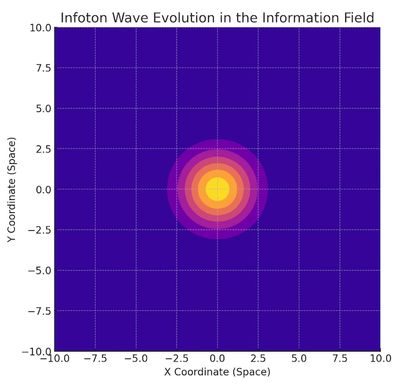
Infoton opens the door to precision energy also known as Zero Point Energy, simply through a BIOS upgrade, and a redesign to our RAM which the technology already exists and is being shipped today.